

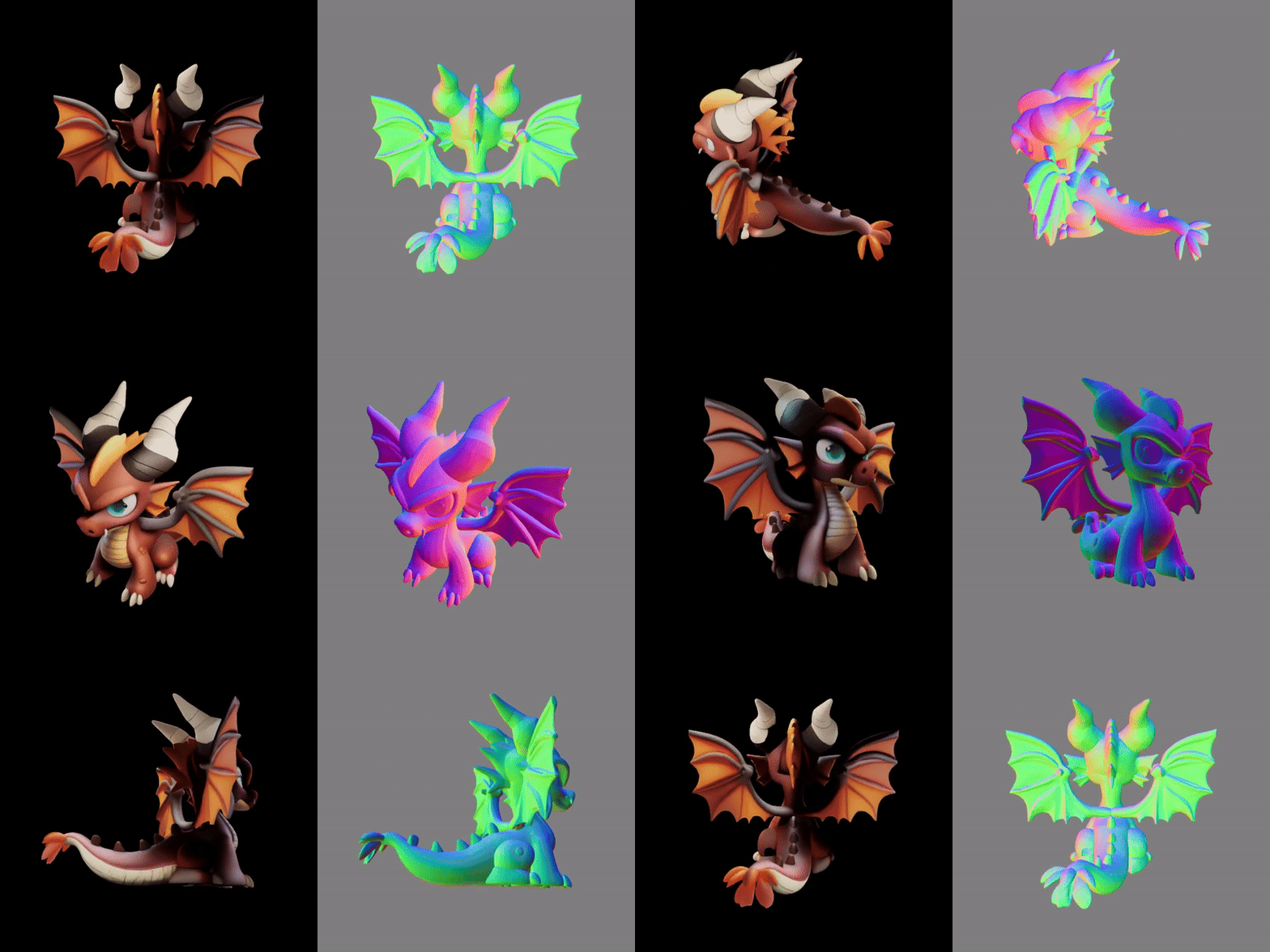
Introduction
The world of digital creation is changing fast, and one of the most exciting breakthroughs is how simple text can now become fully formed 3D objects. This process is often called text-to-3D generation, and it is reshaping how designers, developers, and creators build digital assets. In this space, the idea of trellis text to 3d has become an important concept, representing a new way of turning written prompts into detailed 3D models using advanced AI systems. Instead of spending hours or days modeling objects manually, creators can now describe what they want and let intelligent systems generate it in a structured and realistic form.
Platforms like trellis3 are helping push this innovation forward by focusing on smarter, faster, and more accurate 3D generation workflows. The trellis text to 3d approach is not just about automation—it is about improving creativity, reducing technical barriers, and making 3D design more accessible to everyone. As we move into 2026, this technology is becoming more refined, more reliable, and more widely used in industries like gaming, product design, education, and virtual reality.
Understanding the Core Idea Behind trellis text to 3d Systems
At its core, trellis text to 3d is about converting natural language descriptions into structured 3D digital objects. This means a user can type something like “a futuristic chair with glowing edges,” and the system interprets that description to build a complete 3D model. The AI breaks down the text, understands shapes, materials, and style, and then reconstructs it in a digital 3D space using advanced algorithms like neural rendering and diffusion models.
This approach is different from traditional 3D modeling because it removes the need for manual sculpting or complex software skills. Instead, the system relies on machine learning models trained on large datasets of 3D shapes and text descriptions. The trellis text to 3d workflow is designed to bridge human language and machine interpretation, making the creative process faster and more intuitive while still maintaining accuracy and visual quality.
How AI Interprets Prompts in trellis text to 3d Generation Flow
When a user inputs a prompt into a trellis text to 3d system, the AI first performs semantic analysis. This means it studies the meaning of the words rather than just the words themselves. For example, it identifies objects, textures, proportions, and relationships between elements in the sentence. This step is essential because it ensures the final 3D model matches the user’s intent instead of producing random shapes.
After understanding the prompt, the system begins generating a rough 3D structure. This is often called a base mesh, which acts as the foundation of the object. From there, the AI refines details such as lighting, surface texture, and geometry. In modern trellis text to 3d pipelines, this process is highly optimized so results appear quickly and can be adjusted in real time, giving users more control over the final output.
The Role of Prompt Engineering in trellis text to 3d Models
Prompt engineering plays a major role in getting high-quality results from trellis text to 3d systems. A prompt is simply the text description given to the AI, but how that text is written can significantly affect the final 3D model. Clear, descriptive language helps the system understand shape, style, and function more accurately, while vague prompts may lead to less precise results.
In advanced workflows, users learn how to structure prompts in a way that guides the AI more effectively. For example, adding details about material type, lighting style, or environment can improve output quality. In the trellis text to 3d ecosystem, prompt engineering is becoming a key skill because it connects human creativity with machine interpretation, allowing more control over the generation process without requiring technical 3D modeling knowledge.
Why trellis text to 3d is Changing 3D Design Workflows
One of the biggest impacts of trellis text to 3d technology is how it transforms traditional design workflows. In the past, creating a 3D model required specialized software, technical training, and a lot of time. Now, designers can generate initial models in seconds using text prompts, which significantly speeds up the early stages of production. This allows creative teams to focus more on ideas rather than technical execution.
Another important change is accessibility. With trellis text to 3d tools, beginners can enter the world of 3D design without needing advanced skills. This opens opportunities for students, indie developers, and small businesses. Platforms like trellis3 are helping make this shift possible by offering tools that simplify the process while still producing high-quality 3D assets suitable for professional use.
Real-World Applications of trellis text to 3d Technology
The use cases for trellis text to 3d generation are growing across many industries. In gaming, developers use it to quickly prototype characters, environments, and objects, which speeds up game development cycles. In product design, companies can visualize new ideas instantly without building physical prototypes, saving both time and resources. This makes innovation faster and more flexible.
In education and virtual reality, trellis text to 3d tools help create interactive learning environments. Teachers can generate models for science lessons, architecture studies, or historical reconstructions using simple text descriptions. This makes learning more engaging and visual. As the technology improves, more industries are expected to adopt trellis text to 3d systems for creative and practical applications.
The Future of trellis text to 3d and Generative AI
Looking ahead, trellis text to 3d technology is expected to become even more advanced, with better accuracy, faster generation speeds, and more realistic outputs. Future systems will likely understand complex prompts more deeply, allowing users to describe entire scenes with multiple objects and interactions. This will make 3D creation feel even more natural and intuitive.
Another important direction is integration with real-time editing tools. Users may soon be able to modify generated models instantly by adjusting text prompts instead of manually editing geometry. As platforms like trellis3 continue to evolve, trellis text to 3d will likely become a core part of digital content creation, shaping how industries design, build, and imagine 3D worlds.
Conclusion
The rise of trellis text to 3d generation marks a major shift in how we think about creativity and digital design. Instead of relying only on technical modeling skills, creators can now use simple language to bring ideas to life in three-dimensional form. This change is not just about convenience—it is about expanding access to powerful tools that were once limited to experts.
As this technology continues to grow in 2026 and beyond, it will play an even bigger role in gaming, education, product design, and virtual environments. With platforms like trellis3 leading innovation, trellis text to 3d systems are set to become a standard part of the creative process, helping turn imagination into reality faster and more easily than ever before.
