

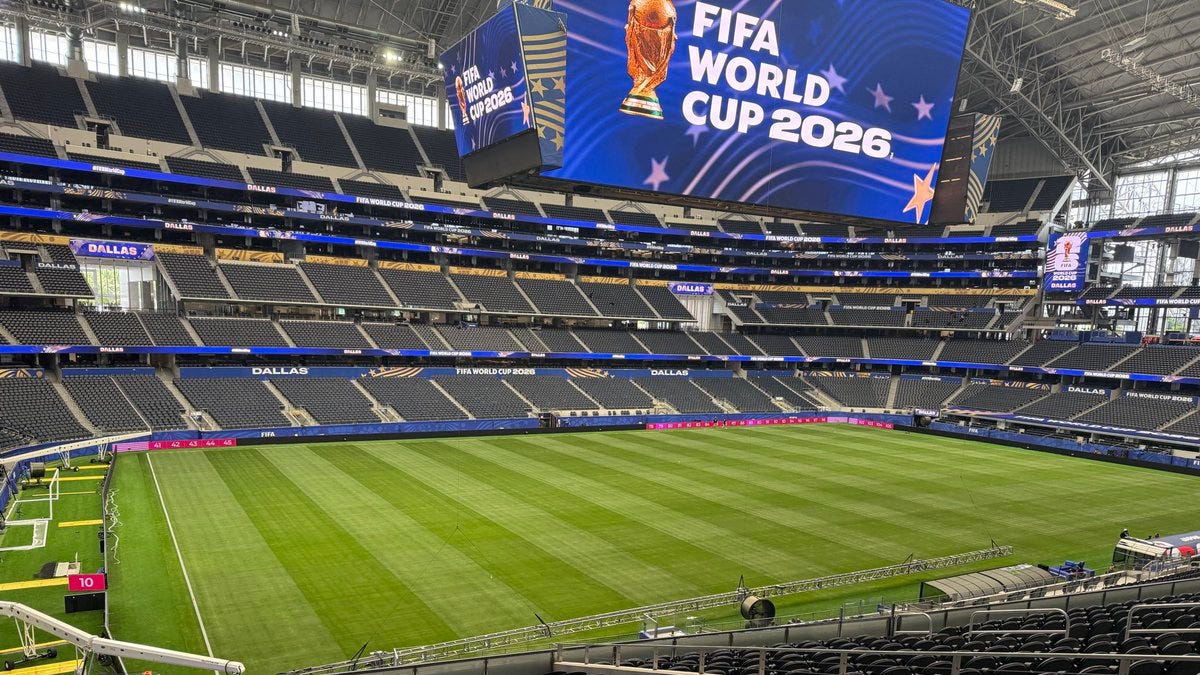
SoFi Stadium is often introduced as an engineering marvel and one of the most expensive stadiums ever built, but for football fans its real importance lies in how its design will shape matches during the 2026 World Cup. With a large capacity, a distinctive indoor–outdoor bowl and a newly installed natural grass surface tailored to FIFA’s requirements, the venue in Inglewood will create specific tactical and physical conditions that you will be able to see in real time when you follow full matches from Los Angeles.
Why SoFi Stadium Matters For World Cup Match Dynamics
Opened in 2020 in Inglewood, California, SoFi Stadium was built primarily for American football but will be a key host venue for the 2026 World Cup, with a capacity of around 70,000 for FIFA matches, expandable for major events. The stadium’s huge excavated bowl, premium sightlines and wraparound video infrastructure will make it one of the most visually striking arenas on the tournament schedule, yet beneath that spectacle are structural choices—pitch placement, stands proximity, roof design—that will quietly influence how teams manage space, tempo and risk. For viewers, understanding those factors helps you read performances more accurately than if you treat every venue as interchangeable.
The Roof And Indoor–Outdoor Design: How The Bowl Changes What You See
SoFi’s cable-net ETFE roof canopy covers the seating bowl while leaving the sides open, creating an indoor–outdoor environment that protects fans from rain while still allowing the Southern California climate to circulate. This type of roof can trap sound and amplify crowd noise, while also shielding the pitch from direct wind and some weather variation, leading to more stable ball flight and more consistent passing conditions than you might see in fully open stadiums. For live viewers, that means high diagonal passes, lofted through balls and crosses are less likely to be distorted by gusts, so technical quality and tactical structure play an even larger role in determining chance quality.
From NFL Turf To FIFA Grass: The Surface Transition And Its Tactical Impact
Ahead of the World Cup, SoFi has undergone a major transition from its usual artificial turf base to a predominantly natural grass pitch, following FIFA’s mandate that all 16 host venues provide high-quality grass surfaces. Reports indicate that hybrid surfaces at U.S. stadiums, including SoFi, now feature around 95% natural grass, supported by research-driven blends of Kentucky bluegrass and ryegrass or hybrid warm-weather grasses, cultivated off-site and installed in patches on carefully prepared substructures. That level of preparation matters when you watch matches, because it affects ball speed, the reliability of first touches in tight areas and players’ confidence when accelerating or decelerating at full tilt, all of which feed directly into xG via the quality and cleanliness of final actions.
Using ดูบอลสด To Understand How SoFi’s Environment Shapes Matches
The best way to grasp how SoFi’s design influences play is to watch full games from the stadium rather than just highlights. When you commit to ดูบอลสด, you can track how the ball travels across the grass patches, whether players adjust their stride patterns in certain zones, how often long aerial switches hold their line under the roof, and how pressing intensity builds as crowd noise reverberates through the covered bowl. Over several matches, you start to recognise the stadium’s “signature”: whether it tends to favour quick, vertical teams who thrive in stable passing conditions, or possession-heavy sides who use the consistent surface and controlled environment to run elaborate positional patterns that slowly engineer high-quality chances in the box.
Checklist For Watching A World Cup Match At SoFi With A Tactical Eye
Because SoFi is such a unique environment, it helps to go into each match with a structured way of observing how the stadium is affecting play. Rather than treating every misplaced pass or pressing drop-off as a simple error, you can connect those events to the pitch, roof and climate, and decide whether they are individual mistakes or logical responses to the conditions in Inglewood. The following sequence offers a practical checklist to run through while you watch.
- In the opening ten minutes, pay attention to ball speed along the ground and how cleanly first touches stick under pressure.
- Watch the trajectory of long diagonals and crosses to see how the roofed, low-wind environment affects aerial passes.
- Track pressing height and spacing in the first and last 20 minutes, noting whether teams maintain their intensity or settle into more compact shapes.
- Observe how often the surface seems to help quick one-twos and third-man runs around the box without bobbles or miscontrols.
- Compare the effectiveness of set-piece deliveries—inswingers vs outswingers, flat vs lofted balls—in the controlled bowl.
Revisiting these observations after the match and comparing them with xG, shot locations and pass completion figures helps you build a more nuanced view of team performance. You may find that what looked like dominance was partly enabled by perfect conditions for their style, or that a side’s struggles in tight spaces were exacerbated by subtle differences in how the ball rolled on newly laid grass.
Table: SoFi Stadium’s Structural Features And What They Mean For Match Tactics
Summarising SoFi’s core characteristics in a table helps connect stadium design to the tactical patterns you can expect to see at the World Cup. Thinking in this way pushes you to watch actively—checking whether teams use the full width, test the air space under the roof, or trust the surface enough to play risky combinations in crowded zones.
| Stadium feature | Detail at SoFi Stadium | Tactical implication for viewers to track |
| Capacity and bowl | Around 70,000 for FIFA events, steep lower tiers | Intense noise can boost pressing energy and affect communication |
| Roof and environment | Translucent ETFE canopy, indoor–outdoor design | Stable ball flight, less wind; more emphasis on technical quality |
| Playing surface | Hybrid, ~95% natural grass installed for World Cup | Faster, truer roll; encourages quick passing and sharp combinations |
| Climate | Mild coastal California conditions | Fewer weather disruptions; more consistent high-tempo potential |
| Multi-use NFL base | Normally turf, temporary grass overlay for 2026 | Maintenance and wear patterns to watch across multiple matchdays |
Connecting these features to live play allows you to anticipate the kind of match you are likely to see. For example, a high-tempo pressing team might flourish in SoFi’s predictable environment, consistently forcing high turnovers and generating strong xG from central areas, while a team reliant on chaotic, weather-disrupted games may find fewer external variables to exploit. That awareness helps you judge whether a side’s performance represents a true measure of their level or is partly a product of the stadium’s neutrality and technical friendliness.
How SoFi’s Grass Project Fits Into FIFA’s Wider Pitch Strategy
The installation of natural grass at SoFi is part of a broader FIFA initiative to upgrade all North American World Cup venues from artificial to predominantly grass surfaces, backed by years of turf research involving universities and specialist agronomists. Grass for stadiums like SoFi has been grown on plastic at dedicated sod farms, cut in large sections, refrigerated and laid over sophisticated sand and drainage systems designed to maintain consistent playing quality during the tournament window. For viewers, this context explains why pitches might look and play similarly across different U.S. venues, reducing surface variability and placing even more weight on tactical planning, player movement and finishing quality as the main drivers of xG and match outcomes.
Conditional Scenarios For How Matches At SoFi Might Play Out
In a World Cup setting, SoFi’s stable environment could lead to several distinct match types depending on the teams involved. If both sides are comfortable in possession and eager to press, you might see high-tempo contests with lots of vertical passes, quick regains and a relatively high combined xG, as the surface and roof support precise execution under pressure. Alternatively, in knockout matches where coaches prioritise control and risk management, the same conditions could lead to slower, chess-like games where chance quality comes from a handful of meticulously constructed attacks or carefully rehearsed set pieces rather than volume. Recognising which scenario is emerging as you watch helps you adjust expectations and avoid labelling a low-scoring, low-xG match as “boring” when it may actually be a deliberate tactical stalemate shaped by the stadium’s reliability.
Summary
SoFi Stadium’s status as the world’s most expensive stadium matters less to match outcomes than the specific เว็บดูบอลสด changy environment it creates: a covered, temperate bowl with a research-driven natural grass surface and strong acoustics. By understanding its roof, surface and capacity, and by watching full World Cup matches with a structured focus on ball behaviour, pressing patterns and shot quality, you can interpret performances and xG trends in Los Angeles with far greater clarity. That perspective turns each game at SoFi from a generic spectacle into a detailed case study in how cutting-edge stadium design interacts with elite football tactics.
